



Soil machinery
Ploughing with the plough is one of the oldest methods of soil cultivation.
Modern ploughs are now capable of both shallow and deeper cultivation, guaranteeing a surface free of stubble residue.
They can also be used to incorporate organic or sludge manure into deeper layers.
Benefits of no-till farming
Plough - The dominant soil machinery
The plough is used for ploughing, mainly for basic autumn cultivation, but in some cases it can also be used for stubble ploughing.
The plough can be made up of any number of plough heads, depending on the tractor’s power.
The two main components of the plough head determine the quality of the work; one is the plough blade, which is responsible for cutting the furrow, and the other is the steering plate, which is responsible for turning the soil.
Factories are constantly improving on their products and there are now ploughs fit for ‘carbon sequestration farming’, but the basic concept has been the same for hundreds of years, turning the top layer of soil to the bottom of the furrow.


Plow-sole disease - Disadvantages of ploughing
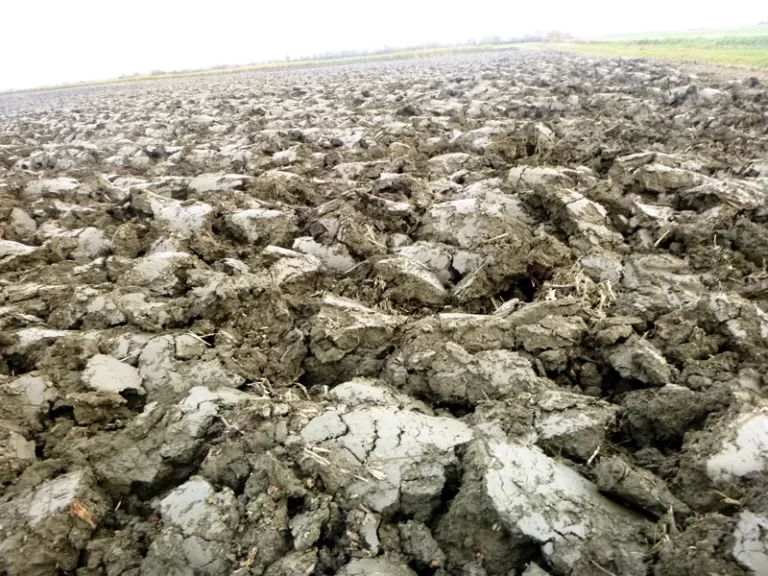
Ploughing is a popular form of soil cultivation, but a common problem is that ploughing can result in plow-sole, especially if done at the wrong time or at the same depth every year.
The compact layer (plow-sole) below the ploughing depth can be easily measured with a farmer’s stick, and in some cases there is even disc packing between the surface and the plow-sole.
Plow-sole forms an impenetrable sheet that prevents water, minerals and plant roots from penetrating deeper into the soil.
Negative effects - Soil cracking, erosion and deteriorating soil life
Ploughing is less suitable in dry conditions because intensive cultivation causes relatively high moisture loss, which makes it more difficult for plants to germinate and grow if there is insufficient rainfall after sowing.
Heavy rainfall after sowing can also lead to problems on a soil type that is prone to cracking if it is completely uncovered.
Intense rainfall and wind increase the risk of erosion in certain regions.
Both intensive tillage and ploughing reduce the number of earthworms in the soil, which are responsible for the production of humus.


High time and energy requirements - Ploughing is a major determinant of farm results
Ploughing not only has a negative impact on the soil, it can also increase our expenditure.
In the case of conventional ploughing in the autumn, it is always necessary to count on soil sealing and seedbed preparation early in the spring, which is definitely an additional expense compared to no-tillage, because in this case the basic cultivation carried out with a cultivator in the autumn is compacted by the machine’s sealing roller, so it suffices to ensure only proper seedbed preparation in the spring.
The state-of-the-art technology is currently sowing after strip-tillage, or even direct drilling if your soil has already reached a sufficiently loose state.
This can be seen clearly in the figure, where, going from left to right, in addition to the number of operations, the fuel and working time used are also reduced.
Is there life beyond the plough? - It's never too late to change
In the increasingly extreme weather conditions and in drier years, ploughing under the autumn grain crops dries out the soil further, significantly reducing the chances of optimal germination.
The autumn’s unworked, fallow ploughing before spring cultivation leaves the stubble to crumble to dust by the springtime, the dust is blown away by the wind but the next rain washes it into the soil, increasing the compactness.
NO-TILL SOIL CULTIVATION
No-till farming has its origins in the USA and Australia, where there are already several farms that have been successfully using the technology for more than 40 years.
On these farms, instead of the plough, various machines are used, such as disc cultivators, deep cultivators or combined machines.
In the wake of the success of the American model, low-tillage implements have been gaining popularity in Europe over the last 5-10 years, and their popularity has been growing every year. These farms highlight the following benefits: lower fuel costs, lower time and labour requirements, reduced risk of erosion and increased soil moisture retention.
Shallow cultivation - Stubble plooughing & seedbed preparation
With its high-throughput vibrating hoes and front shredding roller, the Simple shallow cultivator is highly efficient at tackling crop residues and weeds.
And with minimal cultivation, it can also be used to make a perfect seedbed in areas with a lot of mulch.


Medium depth cultivation - From stubble ploughing to basic cultivation
Thanks to its versatile tillage equipment, outstanding frame height and non-blocking sealing rollers, the Performance cultivator is suitable for all types of soil, whether it’s shallow ploughing or tillage 38 cm deep.
The NorAn Performance is the best possible choice for the first implement in no-till cultivation.
Strip-tillage - Maximum yields & developing soil life
With NorAn Striptill strip tillage, the cultivation is not done over the whole surface as with ploughing or mulch cultivation, but in 20-25 cm wide strips, so there are significant fuel savings.
During the operation, we can also apply solid or liquid nutrients in a targeted way, so that the nutrients are only applied where the crop can use them.
The system can only work with RTK automatic steering, because in the spring it has to be sown on the same lanes.
